
Leander Paes, BJP leaders and TMC Councillor join CM Suvendu's 'Run for Yoga' marathon
.gif)

Download Mobile App 







The government has formally withdrawn the Income-Tax Bill, 2025, which was introduced in the Lok Sabha on February 13 to replace the Income-Tax Act, 1961. A new version of the bill, incorporating most recommendations from the 31-member Select Committee chaired by Baijayant Panda, will be tabled in the Lok Sabha on August 11. The decision was taken to avoid confusion from having multiple versions of the bill and to present a consolidated text with all accepted changes.
The Select Committee submitted its report to Parliament on July 21. The report, spanning over 4,500 pages, contains 285 suggestions for improving the draft bill. The proposed amendments include changes in definitions such as "capital asset," "infrastructure capital company," and "MSME," clearer rules for property-related deductions, and reaffirmation of the ‘actual payment’ rule for claiming business expenses. The committee has also recommended reinstating the provision allowing nil withholding tax certificates, which was missing from the February draft.
Among the key changes for individual taxpayers, the committee has suggested that the 30% standard deduction on house property income, already allowed after municipal tax deductions, should be clearly stated in the new law. It also proposed extending home loan interest deductions, currently allowed only for self-occupied properties, to rented properties. For TDS and TCS refunds, the committee called for a faster, more transparent process. Additionally, it recommended allowing refund claims even when returns are filed late.
For charitable and not-for-profit entities, the committee has proposed replacing the term “receipts” with “income” for tax purposes, restoring the concept of “deemed application,” and providing clearer definitions. It also recommended that professionals be included under electronic payment requirements and that qualifications be prescribed for valuers. In the case of General Anti-Avoidance Rules (GAAR), the panel has stressed ensuring fairness in application.
Corporate taxpayers may benefit from the recommendation to allow inter-corporate dividend deductions for companies that have opted for the 22% tax rate. This deduction is already permitted under the existing law but was not included in the initial draft of the new bill. The Central Board of Direct Taxes (CBDT) has stated that new rules are being drafted under the “Enforcement with Empathy” policy to reduce burdens on honest taxpayers. The revised Income-Tax Bill aims to simplify provisions and present them in clearer language without altering the overall tax structure.




.webp)

-1781775840290_v.webp)
.webp)


 West Bengal
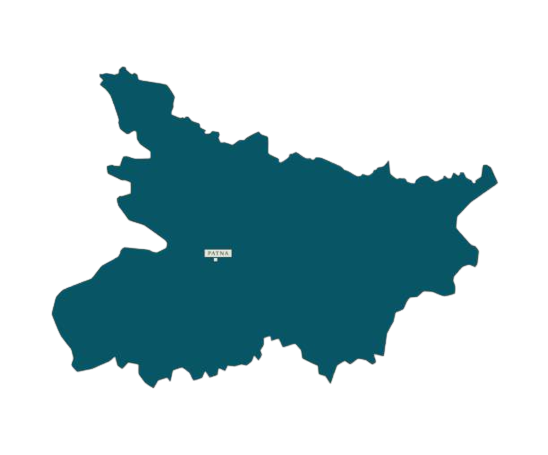 Bihar
Bihar Uttar Pradesh
 Jharkhand